

2 chapters freeNo account needed.
Opens chapter 1 in the player · no sign-up needed
Set in the Bavarian village famous for its passion play, it contrasts the devout old ways of Ammergau with the modern pilgrims drawn by the performance.
Inside the book
- Free nowno account · 2 chapters
- —Introduction20 min
- 2Chapter 114 min
- Premium39 chapters · every book, 7 days free
- 2Old Ammergau32 min
- 3Young Ammergau15 min
- 4Expelled from the Play23 min
- 5Modern Pilgrims33 min
- 6The Evening Before the Play23 min
- 7The Passion Play53 min
- 8Freyer. The Play was over34 min
- 9Signs and Wonders24 min
- 10In the Early Morning22 min
- 11Mary and Magdalene36 min
- 12Bridal Torches24 min
- 13Banished from Eden7 min
- 14Pieta. Twilight was gathering when the pair reached...14 min
- 15The Crowing of the Cock31 min
- 16Prisoned. The prince had left the room, and she hear...21 min
- 17Flying from the Cross33 min
- 18The Marriage27 min
- 19At the Child's Bedside25 min
- 21Chapter 2031 min
- 21Unaccountable22 min
- 22Falling Stars47 min
- 23Noli Me Tangere27 min
- 24Attempts to Rescue17 min
- 25Day Is Dawning23 min
- 26The Last Support17 min
- 27Between Poverty and Disgrace19 min
- 28Parting. Several minutes have passed—to the duke a w...27 min
- 29In the Deserted House19 min
- 30The "Wiesherrle."16 min
- 31The Return Home14 min
- 32To the Village14 min
- 33Received Again23 min
- 34AT DAISENBERGER's GRAVE15 min
- 35The Watchword16 min
- 36Memories. Amid conflicts such as those just describe...14 min
- 37The Measure Is Full20 min
- 38On the Way to the Cross19 min
- 39Stations of Sorrow21 min
- 40Near the Goal21 min
The opening
Chapter 1
A Phantom.
Solemn and lofty against the evening sky towers the Kofel, the land-mark and protecting rock-bulwark of Oberammergau, bearing aloft its solitary cross, like a threatening hand uplifted in menace to confront an advancing foe with the symbol of victory.
Twilight is gathering, and the dark shadow of the mighty protector stretches far across the quiet valley. The fading glow of sunset casts a pallid light upon the simple cross which has stood on the mountain peak for centuries, frequently renewed but always of the same size, so that it can be seen a long distance off by the throngs who journey upward from the valley, gazing longingly across the steep, inhospitable mountains toward the goal of the toilsome pilgrimage.
It is Friday. A long line of carriages is winding like a huge serpent up the Ettal mountain. Amid the throng, two very handsome landaus are especially conspicuous. The first is drawn by four horses in costly harnesses adorned with a coronet, which prance gaily in the slow progress, as if the ascent of the Ettal mountain was but pastime for animals of their breed. In the equipage, which is open, sit a lady and a gentleman, pale, listless, uninterested in their surroundings and apparently in each other; the second one contains a maid, a man servant, and on the box the courier, with the pompous, official manner, which proclaims to the world that the family he has the honor of serving and in whose behalf he pays the highest prices, is an aristocratic one. The mistress of this elegant establishment, spite of her downcast eyes and almost lifeless air, is a woman of such remarkable beauty that it is apparent even amidst the confusion of veils and wraps. Blonde hair, as soft as silk, clusters in rings around her brow and diffuses a warm glow over a face white as a tea rose, intellectual, yet withal wonderfully, tender and sensuous in its outlines. Suddenly, as though curious to penetrate the drooping lids and see the eyes they concealed, the sun bursts through a rift in the clouds, throwing a golden bridge of rays from mountain to mountain. Now the lashes are raised to return the greeting, revealing sparkling dark eyes of a mysterious color, varying every instant as they follow the shimmering rays that glide along the cliff. Then something flashes from a half-concealed cave and the beams linger a moment on a pale face. It is an image of Christ carved in wood which, with uplifted hand, bids the new comers welcome. But those who are now arriving do not understand its language, the greeting remains unanswered.
The sunbeams glide farther on as if saying, "If this is not the Christ you are seeking, perhaps it is he?" And now—they stop. On a rugged peak, illumined by a halo of light, stands a figure, half concealed by the green branches, gazing with calm superiority at the motley, anxious crowd below. He has removed his hat and, heated by the rapid walk, is wiping the perspiration from his brow. Long black locks parted in the middle, float back from a grave, majestic face with a black beard and strangely mournful black, far-seeing eyes. The hair, tossed by the wind, is caught by a thorny branch which sways above the prematurely furrowed brow. The sharp points glow redly in the brilliant sunset light, as if crimsoned with blood from the head which rests dreamily against the trunk. A tremor runs through the form of the woman below; she suddenly sits erect, as though roused from sleep. The wandering rays which sought her eyes also lead her gaze to those of the solitary man above, and on this golden bridge two sparkling glances meet. Like two pedestrians who cannot avoid each other on a narrow path, they look and pause. They grasp and hold each other—one must yield, for neither will let the other pass.
Then the sunbeam pales, the bridge has fallen, and the apparition vanishes in the forest shadows.
"Did you see that?" the lady asked her companion, who had also glanced up at the cliff.
"What should I have seen?"
"Why—that—that--" she paused, uncertain what words to choose. She was going to say, "that man up there," but the sentence is too prosaic, yet she can find no other and says merely, "him up there!" Her companion, glancing skyward, shakes his head.
"Him up there! I really believe, Countess, that the air of Ammergau is beginning to affect you. Apparently you already have religious hallucinations—or we will say, in the language of this hallowed soil, heavenly visions!"
The countess leans silently back in her corner—the cold, indifferent expression returns to the lips which just parted in so lovely a smile. "But what did you see? At least tell me, since I am not fortunate enough to be granted such visions," her companion adds with kindly irony. "Or was it too sublime to be communicated to such a base worldling as I?"
"Yes," she says curtly, covering her eyes with her hand, as if to shut out the fading sunset glow in order to recall the vision more distinctly. Then she remains silent.
Night gradually closes in, the panting train of horses has reached the village. Now the animals are urged into a trot and the drivers turn the solemn occasion into a noisy tumult. The vehicles jolt terribly in the ruts, the cracking of whips, the rattle of wheels, the screams of frightened children and poultry, the barking of dogs, blend in a confused din, and that nothing may be wanting to complete it, a howling gust of wind sweeps through the village, driving the drifting clouds into threatening masses.
"This is all we lacked—rain too!" grumbled the gentleman. "Shall I have the carriage closed?"
"No," replied the Countess, opening her umbrella. "Who would have thought it; the sun was shining ten minutes ago!"
"Yes, the weather changes rapidly in the mountains. I saw the shower rising. While you were admiring some worthy wood-cutter up yonder as a heavenly apparition, I was watching the approaching tempest." He draws the travelling rug, which has slipped down, closer around the lady and himself. "Come what may, I am resigned; when we are in Rome, we must follow the Roman customs. Who would not go through fire and water for you, Countess?" He tries to take her hand, but cannot find it among the shawls and wraps. He bites his lips angrily; he had expected that the hand he sought would gratefully meet his in return for so graceful an expression of loyalty! Large drops of rain beat into his face.
"Not even a clasp of the hand in return for the infernal journey to this peasant hole," he mutters.
The carriages thunder past the church, the flowers and crosses on the graves in the quiet church-yard tremble with the shaking of the ground. The lamps in the parsonage are already lighted, the priest comes to the window and gazes quietly at the familiar spectacle. "Poor travellers! Out in such a storm!"
One carriage after another turns down a street or stops before a house. The Countess and her companion alone have not yet reached their destination. Meantime it has grown perfectly dark. The driver is obliged to stop to shut up the carriage and light the lantern, for the rain and darkness have become so dense and the travellers are drenched. An icy wind, which always accompanies a thunderstorm in the mountain, blows into their faces till they can scarcely keep their eyes open. The servant, unable to see in the gloom, is clumsy in closing the carriage, the hand-bags fall down upon the occupants; the driver can scarcely hold the horses, which are frightened by the crowds in pursuit of lodgings. He is not familiar with the place and, struggling to restrain the plunging four-in-hand, enquires the way in broken sentences from the box, and only half catches the answers, which are indistinct in the tumult. Meantime the other servants have arrived. The Countess orders the courier to drive on with the second carriage and take possession of the rooms which have been engaged. The man, supposing it is an easy matter to find the way in so small a place, moves forward. The Countess can scarcely control her ill humor.
"An abominable journey—the horses overheated by the ascent of the mountain and now this storm. And the lamps won't burn, the wind constantly blows them out. You were right, Prince, we ought to have taken a hired--" She does not finish the sentence, for the ray from one of the carriage lamps, which has just been lighted with much difficulty, falls upon a swiftly passing figure, which looks almost supernaturally tall in the uncertain glimmer. Long, black locks, dripping with moisture, are blown by the wind from under his broad-brimmed hat. He has evidently been surprised by the storm without an umbrella and is hurrying home—not timidly and hastily, like a person to whom a few drops of rain, more or less, is of serious importance, but rather like one who does not wish to be accosted. The countess cannot see his face, he has already passed, but she distinguishes the outlines of the slender, commanding figure in the dark dress, noticing with a rapid glance the remarkably elastic gait, and an involuntary: "There he goes again!" escapes her lips aloud. Obeying a sudden impulse, she calls to the servant: "Quick, ask the gentleman yonder the way to the house of Andreas Gross, where we are going."
The servant follows the retreating figure a few steps and shouts, "Here, you--" The stranger pauses a moment, half turns his head, then, as if the abrupt summons could not possibly be meant for him, moves proudly on without glancing back a second time.
The servant timidly returns. A feeling of shame overwhelms the countess, as though she had committed the blunder of ordering him to address a person of high rank travelling incognito.
"The gentleman wouldn't hear me," says the lackey apologetically, much abashed. "Very well," his mistress answers, glad that the darkness conceals her blushes. A flash of lightning darts from the sky and a sudden peal of thunder frightens the horses. "Drive on," the countess commands; the lackey springs on the box, the carriage rolls forward—a few yards further and the dark figure once more appears beside the vehicle, walking calmly on amid the thunder and lightning, and merely turns his head slightly toward the prancing horses.
The equipage dashes by—the countess leans silently back on the cushions, and shows no further desire to look out.
"Tell me, Countess Madeleine," asks the gentleman whom she has just addressed as 'Prince,' "what troubles you today?"
The countess laughs. "Dear me, how solemnly you put the question! What should trouble me?"
"I cannot understand you," the prince continued. "You treat me coldly and grow enthusiastic over a vision of the imagination which already draws from you the exclamation: 'There he is again!' I cannot help thinking what an uncertain possession is the favor of a lady whose imagination kindles so easily."
"This is charming," the countess tried to jest. "My prince jealous—of a phantom?"
"That is just it. If a phantom can produce such variations in the temperature of your heart toward me, how must my hopes stand?"
"Dear Prince, you know that whether with or without a phantom, I could never yet answer this question which Your Highness frequently condescends to ask me."
"I believe, Countess, that one always stands between us! You pursue some unknown ideal which you do not find in me, the realist, who has nothing to offer you save prosaic facts—his hand, his principality, and an affection for which unhappily he lacks poetic phrases."
"You exaggerate, Prince, and are growing severe. There is a touch of truth—I am always honest—yet, as you know, you are the most favored of all my suitors. Still it is true that an unknown disputes precedence with you. This rival is but the man of my imagination—but the world contains no one like my ideal, so you have nothing to fear."
"What ideal do you demand, Countess, that no one can attain it?"
"Ah! a very simple one, yet you conventional natures will never understand it. It is the simplicity of the lost Paradise to which you can never return. I am by nature a lover of the ideal—I am enthusiastic and need enthusiasm; but you call me a visionary when I am in the most sacred earnest. I yearn for a husband who believes in my ideal, I want no one from whom I must conceal it in order to avoid ridicule, and thus be unable to be true to my highest self. He whom my soul seeks must be at once a man and a child—a man in character and a child in heart. But where in our modern life is such a person to be found? Where is gentleness without feeble sentimentality? Where is there enthusiasm without fantastic vagueness, where simplicity of heart without narrowness of mind? Whoever possesses a manly character and a strong intellect cannot escape the demands which science and politics impose, and this detracts from the emotional life, gives prominent development to concrete thought, makes men realistic and critical. But of all who suffer from these defects of our time, you are the best, Prince!" she adds, smilingly.'
"That is sorry comfort," murmurs the prince. "It is a peculiar thing to have an invisible rival; who will guarantee that some person may not appear who answers to the description?"
"That is the reason I have not yet given you my consent," replies the countess, gravely.
Her companion sighs heavily, makes no reply, but gazes steadfastly into the raging storm. Alter a time he says, softly, "If I did not love you so deeply, Countess Madeleine--"
"You would not bear with me so long, would you?" asks the countess, holding out her hand as if beseeching pardon.
This one half unconscious expression of friendship disarms the irritated man.—He bends over the slender little hand and raises it tenderly to his lips.
"She must yet be mine!" he says under his breath, by way of consolation, like all men whose hopes are doubtful. "I will even dare the battle with a phantom."
About the author
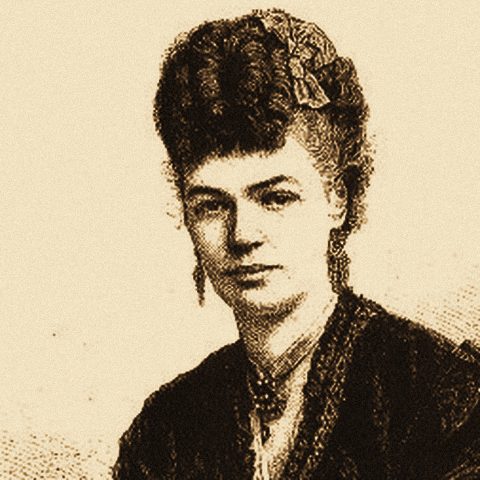
Wilhelmine von Hillern
1836 Munich – 1916 Aschau im Chiemgau · German actress and writer
Wilhelmine von Hillern was a German actress and novelist.
If you like On the Cross
More like this


Start with chapter 1
2 chapters free right now — no account. Your place follows you to iPhone and Android.