

2 chapters freeNo account needed.
Opens “Nurse” in the player · no sign-up needed
In Corinth, Medea, the foreign princess who helped Jason win the Golden Fleece, learns that he has abandoned her and their sons to marry the king's daughter.
Inside the book
- Free nowno account · 2 chapters
- —Introduction12 min
- 1Nurse12 min
- Premium14 chapters · every book, 7 days free
- 2Medea10 min
- 3Medea3 min
- 4Chorus3 min
- 5Medea3 min
- 6Jason7 min
- 7Chorus9 min
- 8Medea4 min
- 9Chorus2 min
- 10Medea10 min
- 11Medea4 min
- 12Chorus3 min
- 13Messenger6 min
- 14Chorus11 min
- 15Chorus30 min
The opening
Nurse
Would God no Argo e'er had winged the seas To Colchis through the blue Symplegades: No shaft of riven pine in Pelion's glen Shaped that first oar-blade in the hands of men Valiant, who won, to save King Pelias' vow, The fleece All-golden! Never then, I trow, Mine own princess, her spirit wounded sore With love of Jason, to the encastled shore Had sailed of old Iolcos: never wrought The daughters of King Pelias, knowing not, To spill their father's life: nor fled in fear, Hunted for that fierce sin, to Corinth here With Jason and her babes. This folk at need Stood friend to her, and she in word and deed Served alway Jason. Surely this doth bind, Through all ill days, the hurts of humankind, When man and woman in one music move. But now, the world is angry, and true love Sick as with poison. Jason doth forsake My mistress and his own two sons, to make His couch in a king's chamber. He must wed: Wed with this Creon's child, who now is head And chief of Corinth. Wherefore sore betrayed Medea calleth up the oath they made, They two, and wakes the clasped hands again, The troth surpassing speech, and cries amain On God in heaven to mark the end, and how Jason hath paid his debt.
All fasting now And cold, her body yielded up to pain, Her days a waste of weeping, she hath lain, Since first she knew that he was false. Her eyes Are lifted not; and all her visage lies In the dust. If friends will speak, she hears no more Than some dead rock or wave that beats the shore: Only the white throat in a sudden shame May writhe, and all alone she moans the name Of father, and land, and home, forsook that day For this man's sake, who casteth her away. Not to be quite shut out from home... alas, She knoweth now how rare a thing that was! Methinks she hath a dread, not joy, to see Her children near. 'Tis this that maketh me Most tremble, lest she do I know not what. Her heart is no light thing, and useth not To brook much wrong. I know that woman, aye, And dread her! Will she creep alone to die Bleeding in that old room, where still is laid Lord Jason's bed? She hath for that a blade Made keen. Or slay the bridegroom and the king, And win herself God knows what direr thing? 'Tis a fell spirit. Few, I ween, shall stir Her hate unscathed, or lightly humble her. Ha! 'Tis the children from their games again, Rested and gay; and all their mother's pain Forgotten!
Young lives ever turn from gloom!
[The CHILDREN and their ATTENDANT come in.
ATTENDANT.
Thou ancient treasure of my lady's room, What mak'st thou here before the gates alone, And alway turning on thy lips some moan Of old mischances? Will our mistress be Content, this long time to be left by thee?
NURSE.
Grey guard of Jason's children, a good thrall Hath his own grief, if any hurt befall His masters. Aye, it holds one's heart!... Meseems I have strayed out so deep in evil dreams, I longed to rest me here alone, and cry Medea's wrongs to this still Earth and Sky.
ATTENDANT.
How? Are the tears yet running in her eyes?
NURSE.
'Twere good to be like thee!... Her sorrow lies Scarce wakened yet, not half its perils wrought.
ATTENDANT.
Mad spirit!... if a man may speak his thought Of masters mad.—And nothing in her ears Hath sounded yet of her last cause for tears!
[He moves towards the house, but the NURSE checks him.
NURSE.
What cause, old man?... Nay, grudge me not one word.
ATTENDANT.
'Tis nothing. Best forget what thou hast heard.
NURSE.
Nay, housemate, by thy beard! Hold it not hid From me... I will keep silence if thou bid.
ATTENDANT.
I heard an old man talking, where he sate At draughts in the sun, beside the fountain gate, And never thought of me, there standing still Beside him. And he said, 'Twas Creon's will, Being lord of all this land, that she be sent, And with her her two sons, to banishment. Maybe 'tis all false. For myself, I know No further, and I would it were not so.
NURSE.
Jason will never bear it—his own sons Banished,—however hot his anger runs Against their mother!
ATTENDANT.
Old love burneth low When new love wakes, men say. He is not now Husband nor father here, nor any kin.
NURSE.
But this is ruin! New waves breaking in To wreck us, ere we are righted from the old!
ATTENDANT.
Well, hold thy peace. Our mistress will be told All in good time. Speak thou no word hereof.
NURSE.
My babes! What think ye of your father's love? God curse him not, he is my master still: But, oh, to them that loved him, 'tis an ill Friend...
ATTENDANT.
And what man on earth is different? How? Hast thou lived all these years, and learned but now That every man more loveth his own head Than other men's? He dreameth of the bed Of this new bride, and thinks not of his sons.
NURSE.
Go: run into the house, my little ones: All will end happily!... Keep them apart: Let not their mother meet them while her heart Is darkened. Yester night I saw a flame Stand in her eye, as though she hated them, And would I know not what. For sure her wrath Will never turn nor slumber, till she hath... Go: and if some must suffer, may it be Not we who love her, but some enemy!
VOICE (within).
Oh shame and pain: O woe is me! Would I could die in my misery!
[The CHILDREN and the ATTENDANT go in.
NURSE.
Ah, children, hark! She moves again Her frozen heart, her sleeping wrath. In, quick! And never cross her path, Nor rouse that dark eye in its pain;
That fell sea-spirit, and the dire Spring of a will untaught, unbowed. Quick, now!—Methinks this weeping cloud Hath in its heart some thunder-fire,
Slow gathering, that must flash ere long. I know not how, for ill or well, It turns, this uncontrollable Tempestuous spirit, blind with wrong.
VOICE (within).
Have I not suffered? Doth it call No tears?... Ha, ye beside the wall Unfathered children, God hate you As I am hated, and him, too, That gat you, and this house and all!
NURSE.
For pity! What have they to do, Babes, with their father's sin? Why call Thy curse on these?... Ah, children, all These days my bosom bleeds for you.
Rude are the wills of princes: yea, Prevailing alway, seldom crossed, On fitful winds their moods are tossed: 'Tis best men tread the equal way.
Aye, not with glory but with peace May the long summers find me crowned: For gentleness—her very sound Is magic, and her usages.
All wholesome: but the fiercely great Hath little music on his road, And falleth, when the hand of God Shall move, most deep and desolate.
[During the last words the LEADER of the Chorus has entered. Other women follow her.
LEADER.
I heard a voice and a moan, A voice of the eastern seas: Hath she found not yet her ease? Speak, O aged one. For I stood afar at the gate, And there came from within a cry, And wailing desolate. Ah, no more joy have I, For the griefs this house doth see, And the love it hath wrought in me.
NURSE.
There is no house! 'Tis gone. The lord Seeketh a prouder bed: and she Wastes in her chamber, not one word Will hear of care or charity.
VOICE (within).
O Zeus, O Earth, O Light, Will the fire not stab my brain? What profiteth living? Oh, Shall I not lift the slow Yoke, and let Life go, As a beast out in the night, To lie, and be rid of pain?
CHORUS.
Some Women
"O Zeus, O Earth, O Light:" The cry of a bride forlorn Heard ye, and wailing born Of lost delight?
Why weariest thou this day, Wild heart, for the bed abhorred, The cold bed in the clay? Death cometh though no man pray, Ungarlanded, un-adored. Call him not thou.
If another's arms be now Where thine have been, On his head be the sin: Rend not thy brow!
All that thou sufferest, God seeth: Oh, not so sore Waste nor weep for the breast That was thine of yore.
VOICE (within).
Virgin of Righteousness, Virgin of hallowed Troth, Ye marked me when with an oath I bound him; mark no less That oath's end. Give me to see Him and his bride, who sought My grief when I wronged her not, Broken in misery, And all her house... O God, My mother's home, and the dim Shore that I left for him, And the voice of my brother's blood...
NURSE.
Oh, wild words! Did ye hear her cry To them that guard man's faith forsworn, Themis and Zeus?... This wrath new-born Shall make mad workings ere it die.
CHORUS.
Other Women.
Would she but come to seek Our faces, that love her well, And take to her heart the spell Of words that speak?
Alas for the heavy hate And anger that burneth ever! Would it but now abate, Ah God, I love her yet. And surely my love's endeavour Shall fail not here.
Go: from that chamber drear Forth to the day Lead her, and say, Oh, say That we love her dear.
Go, lest her hand be hard On the innocent: Ah, let be! For her grief moves hitherward, Like an angry sea.
NURSE.
That will I: though what words of mine Or love shall move her? Let them lie With the old lost labours!... Yet her eye-- Know ye the eyes of the wild kine,
The lion flash that guards their brood? So looks she now if any thrall Speak comfort, or draw near at all My mistress in her evil mood.
[The NURSE goes into the house.
CHORUS.
A Woman.
Alas, the bold blithe bards of old That all for joy their music made, For feasts and dancing manifold, That Life might listen and be glad.
But all the darkness and the wrong, Quick deaths and dim heart-aching things, Would no man ease them with a song Or music of a thousand strings?
Then song had served us in our need. What profit, o'er the banquet's swell That lingering cry that none may heed? The feast hath filled them: all is well!
Others.
I heard a song, but it comes no more. Where the tears ran over: A keen cry but tired, tired: A woman's cry for her heart's desired, For a traitor's kiss and a lost lover. But a prayer, methinks, yet riseth sore To God, to Faith, God's ancient daughter-- The Faith that over sundering seas Drew her to Hellas, and the breeze Of midnight shivered, and the door Closed of the salt unsounded water.
[During the last words MEDEA has come out from the house.
About the author
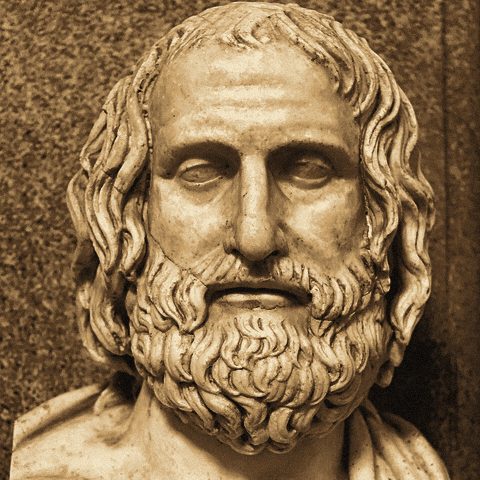
Euripides
Classical Athenian playwright
Euripides was a Greek tragedian of classical Athens. Along with Aeschylus and Sophocles, he is one of the three authors of Greek tragedy whose name is ascribed to surviving plays.
If you like Medea of Euripides
More like this


Start with “Nurse”
2 chapters free right now — no account. Your place follows you to iPhone and Android.