

Chapter 1 freeNo account needed.
Opens “Bibliographical Notice” in the player · no sign-up needed
Mademoiselle de Maupin, Volume 1 is the first part of the 1835 novel by the French writer Theophile Gautier.
Inside the book
- Free nowno account · 1 chapter
- 1Bibliographical Notice10 min
- Premium12 chapters · every book, 7 days free
- 3Shaving Free Here To-Morrow6 min
- 4No Filth Deposited Here5 min
- 7Rosette4 min
- 8Rosette5 min
- 9Rosette4 min
- 10Rosette2 min
- 11Rosette2 min
- 12Rosette3 min
- 13Rosette39 min
The opening
Bibliographical Notice
This celebrated novel, the celebrity of which has not been lessened by the very numerous editions that have been published, had a very modest beginning which in no way foreshadowed the great success which it was to obtain later.
The title: Mademoiselle de Maupin—Double Love appeared, we believe, for the first time in Renduel's catalogue in connection with The Life of Hoffman, by Lœve-Weimars, which appeared in October, 1833, announcing the new work of Théophile Gautier as being in press. Renduel had made the acquaintance of the author at Victor Hugo's; he had published in August, 1833, his first volume of prose, Young France, and now it was a question of launching a work in two volumes, a truly daring undertaking for a publisher of that day; especially in the case of the work of an author but little known and only twenty-two years old.
Mademoiselle de Maupin was not, however, destined to see the light so soon. For two years Théophile Gautier, more enamored of freedom than of work, or preferring the task of making two harmonious rhymes to all the beauties of his learned and rhythmic prose, incessantly abandoned and resumed the promised work. A tradition preserved in the family of the poet tells how his father often shut him up in his room at that time, forbidding him to leave it until he had completed a certain number of pages of the Grotesques or of Mademoiselle de Maupin. When the maternal kindness did not come to his aid, the frolicsome author, who then lived with his parents on Place Royale, often found the means of getting away by the window and so escaping a paternal task. Such escapades being frequently renewed, it may well be believed that the novel made but little progress; 1834 was drawing to a close; only the first of the two volumes was finished; the publisher complained, and the author tried to pacify him by notes similar to the following:
"I have just discovered at a bric-à-brac dealer's a charming picture of Boucher in a splendid state of preservation; it is an opportunity that I do not wish to miss, and not having money enough, I take the liberty of asking you for my balance. You will confer on me a real pleasure in sending it to me.
"I am harnessed to La Maupin, and that prevents me from prowling about and calling on you.
"With cordial wishes, I am, yours,
"THÉOPHILE GAUTIER."
Finally, in 1835, the second volume was written in six weeks on Rue du Doyenné, where the poet, having left the paternal nest, had installed himself; the manuscript was delivered to Renduel and we read the following note in Le Monde Dramatique, of September 20th, concerning the biography of the strange person who really bore the name of Maupin, a biography signed by Rochefort and published in that number under the title: Mademoiselle d'Aubigny-Maupin: "One of our collaborators, Monsieur Théophile Gautier, has been busy for a long time on a romance entitled: Mademoiselle (de) Maupin."
The work was now soon to appear; it was issued in November, 1835, in two octavo volumes, printed by Madame Poussin under the title: Mademoiselle de Maupin—Double Love. The first volume bears the date 1835, the second 1836, while the preface is dated May, 1834.
The work produced no very great sensation. A few journals spoke of it, but publicity was not then systematized as it is to-day, and except by some few literary men and the small romantic group of the author's friends, Mademoiselle de Maupin was soon forgotten. Let us remark, nevertheless, that immediately the book appeared, Honoré de Balzac wrote Renduel a note, asking for a copy, this note we have seen ourselves; from this moment dates the admiration that he always professed thereafter for Théophile Gautier. We learn from Monsieur Arsène Houssaye, the old and faithful friend of the poet, that owing to the failure to sell the work, Renduel determined not to publish anything more for his author; La Comédie de la Mort, already announced upon the covers of the work (as well as Capitaine Fracasse), was, in fact, returned to the author, and only appeared in 1838, when it was published by Desessart, at that time one of Arsène Houssaye's publishers; it was the author of La Couronne de Bleuets, who introduced his friend to him and secured a favorable consideration for his collection of verses.
How strange to us and unlikely, even, all this seems, when one recalls the exorbitant prices obtained for some years past for rare, stitched copies in good condition of the first edition of the work that we are now considering. Many have realized one thousand five hundred francs, that is to say, the total sums received by the author as royalty on the first issue of his work. This sum is verified by his receipts to Renduel, which are in our hands.
A curious incident occurred as to Mademoiselle de Maupin. After its appearance, all the opening of the eleventh chapter was inserted in Le Monde Dramatique of January 4, 1836, without mentioning its source, under the title of: La Comédie Romanesque. Since that time, those pages have been frequently reprinted, but not a single one of these reproductions gives any indication of their origin. It must be admitted that Théophile Gautier himself gave rise to this error in La Presse of December 17, 1838, in again quoting these lines, inserted in an unpublished commentary, as an isolated article which had come under his notice by chance. He had forgotten this extract, and believed in good faith to have found in La Monde Dramatique only a newspaper improvisation. This first mistake was the starting-point of all that succeeded, the most striking of which is the insertion in 1858 of this fragment from Mademoiselle de Maupin in the first volume of Théophile Gautier's work: Histoire de l'Art Dramatique in France. It is useless to add that no one noticed this fact.
Time, however, rolled on, and the renown of the poet continued to increase; his appearance in La Presse in 1836, and his critical work, had made a circle of new readers. Then, Fortunio, La Comédie de la Mort, Une Larme du Diable, Tra Los Montès, Les Grotesques, etc., etc., had considerably increased his literary impedimenta. So, when Monsieur Charpentier, the father of the present publisher of Théophile Gautier's complete works, had founded the collection to which he gave his name, he soon thought of reprinting our author's principal works. Monsieur Charpentier, who succeeded in grouping in his catalogue the most select of the remarkable works of his age, was of refined literary taste and held among the publishers of his day a place similar to that then held by Monsieur Buloz in his capacity of director of La Revue des Deux Mondes: it was difficult to obtain an interview with either, and to appear in print in their collections was regarded as a kind of consecration.
It was in 1845 when four of Théophile Gautier's volumes appeared in the Charpentier catalogue; they were Poésies Complètes, Nouvelles, Voyage en Espagne, and Mademoiselle de Maupin. For this reprint, the first since the original edition, the author modified, but very slightly, some phrases of his work, the text of which, from that time, has never been changed.
Here ends, in reality, the history of this work. Since 1845, the number of editions has continued to increase; we will only quote two that appeared in 1878: one in two volumes, 24mo, illustrated with four designs by Eugèn Giraud, and another in a large 12mo volume, upon Holland paper, embellished with a portrait of the heroine by Théophile Gautier himself, the portrait dated 1834. Finally, in 1880, there was added to a reprint of this edition, a reproduction of the medallion of the author by David d'Anger; this reproduction is erroneously dated 1834, instead of 1835, which is the actual year of its execution.
Is it possible, as has often been asserted, that this work, whose incomparable style should have warranted the opening of the doors of the Académie Française to the author, was in part the cause of their remaining stubbornly closed against him?—We do not know; but from another tradition preserved in the poet's family, it would appear that the father himself, when he knew of the completion of the work (only the first volume, as we have seen, was written under his eyes), could not have been without apprehension as to the part which the book would play in the life of his son, and, notwithstanding his admiration for the style of the work, he would often have expressed the fear that the second volume would at times influence the future of the author.
In any case, the renown of Théophile Gautier, like that of his illustrious friend, Honoré de Balzac, who, likewise, was never a member of the Académie, has only increased since his death, and the names of these two rare talents are in truth missed among those of the members of that illustrious body. For Théophile Gautier at least, the Académie itself expressed one day, by the mouth of one of its members, its regret at not having received him. On October 25, 1872, at its public session and at the very hour of the obsequies of the great writer, Monsieur Camille Doucet pronounced the following words which do honor to their author, and we are happy to reproduce them here: "Permit me to digress a moment. When I speak of the fraternity of Letters, I should fail, messieurs, if I appeared longer to forget that at this very hour, upon the threshold of a tomb, which I have left only with regret to come here to fulfil another duty, Letters mourning, weep for a true poet dear to all, a brilliant writer whose wit was thoroughly French and whose heart was still more French. Very many votes have proved to him that his place was indicated among us, and so we deplore the more the sudden stroke to which Théophile Gautier succumbs."
We will add nothing to these touching lines and will close this notice by saying a few words as to the present edition of Mademoiselle de Maupin. It is the first reprint, absolutely conforming to the original text. The work appears in two volumes, divided like those of 1835, and the publishers have exerted every effort to satisfy bibliophiles desirous of possessing as perfect an edition as possible, both as regards the exactness of the text and the technical execution of the work.
Finally, let us say that the designs of E. Toudouze, made especially for this work, will render this edition still more complete. It will rank, we hope, among the most treasured editions of the book.
About the author
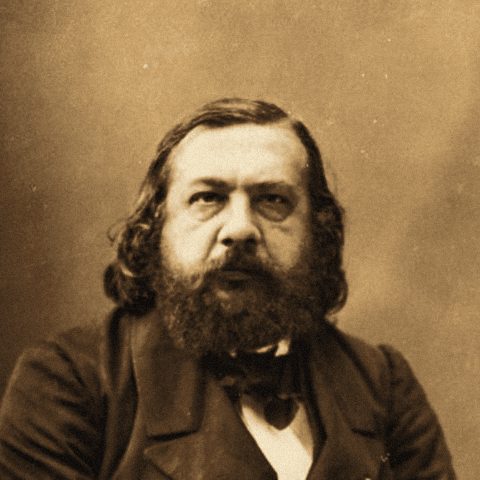
Théophile Gautier
1811 Tarbes – 1872 Neuilly-sur-Seine · French poet, dramatist, novelist, journalist, and art and literary critic
Pierre Jules Théophile Gautier was a French poet, dramatist, novelist, journalist, and art and literary critic.
If you like Mademoiselle de Maupin, Volume 1
More like this


Start with “Bibliographical Notice”
First chapter free right now — no account. Your place follows you to iPhone and Android.