

2 chapters freeNo account needed.
Opens “The Child at Home and at School” in the player · no sign-up needed
Harriet Martineau is an 1884 biography by the British writer and campaigner Florence Fenwick Miller of the English social theorist, economist and journalist.
Inside the book
- Free nowno account · 2 chapters
- —Preface5 min
- 1The Child at Home and at School33 min
- Premium11 chapters · every book, 7 days free
- 2Early Womanhood: Developing Influences25 min
- 3Earliest Writings20 min
- 4Grief Struggle and Progress40 min
- 5The Great Success35 min
- 6Five Active Years29 min
- 7Five Years of Illness and the Mesmeric Recovery29 min
- 8The Home Life27 min
- 9In the Maturity of Her Powers37 min
- 10In Retreat; Journalism40 min
- 11Part 1 of 2: The Last Years33 min
- 13Chapter 1133 min
The opening
The Child at Home and at School
The Child At Home And At School.
When Louis XIV. of France revoked the Edict of Nantes, in 1688, a large number of the Protestants who were driven out of France by the impending persecutions came to seek refuge in this favored land of liberty of ours. Many who thus settled in our midst were amongst the most skillful and industrious workers, of various grades, that could have been found in the dominions of the persecuting king who drove them forth. They must have been, too, in the nature of the case, strong-hearted, clear in the comprehension of their principles, and truthful and conscientious about matters of opinion; for the cowardly, the weak, and the false could stay in their own land. From the good stock of these exiles for conscience-sake sprang Harriet Martineau.
Her paternal Huguenot ancestor was a surgeon, who was married to a fellow-countrywoman and co-religionist of the name of Pierre. This couple of exiles for freedom of opinion settled in Norwich, where the husband pursued his profession. Their descendants supplied a constant succession of highly-respected surgeons to the same town, without intermission, until the early part of this century, when the line of medical practitioners was closed by the death of Harriet Martineau's elder brother at less than thirty years old. The Martineau family thus long occupied a good professional position in the town of Norwich.
Harriet's father, however, was not a surgeon, but a manufacturer of stuffs, the very names of which are now strange in our ears—bombazines and camlets. His wife was Elizabeth Rankin, the daughter of a sugar-refiner of Newcastle-on-Tyne. A true Northumbrian woman was Mrs. Martineau; with a strong sense of duty, but little warmth of temperament; with the faults of an imperious disposition, and its correlative virtues of self-reliance and strength of will. These qualities become abundantly apparent in her in the story of her relationship with her famous daughter. On both sides, therefore, Harriet Martineau was endowed by hereditary descent with the strong qualities—the power, the clear-headedness, and the keen conscience—which she interfused into all the work of her life.
Thomas and Elizabeth Martineau, her father and mother, were the parents of eight children, two of whom became widely known and influential as thinkers and writers. Harriet was the sixth of the family, and was born at Norwich, in Magdalen street, on the 12th of June, 1802, the mother being at that time thirty years old. The next child, born in 1805, was the boy who grew up to become known as Dr. James Martineau; so that the two who were to make the family name famous were next to each other in age. Another child followed in this family group, but not until 1811, when Harriet was nine years old, so that she could experience with reference to this baby some of that tender, protective affection which is such an education for elder children, and so delightful to girls with strong maternal instincts such as she possessed.
The sixth child in a family of eight is likely to be a personage of but small consequence. The parents' pride has been somewhat satiated by previous experiences of the wonders of the dawning faculties of their children; and the indulgence which seems naturally given to "the baby" gets comparatively soon transferred from poor number six to that interloper number seven. Mrs. Martineau, too, was one of that sort of women who, as they would say, do not "spoil" their children. Ready to work for them, to endure for them, to struggle to provide them with all necessary comforts, and even with pleasures, at the cost, if need be, of personal sacrifice of comfort and pleasure, such mothers yet do not give to their children that bountiful outpouring of tender, caressing, maternal love, which the young as much require for their due and free growth as plants do the floods of the summer sunshine. To starve the emotions in a child is not less cruel than to stint its body of food. To repress and chain up the feelings is to impose as great a hardship as it would be to fetter the freedom of the limbs. Mothers who have labored and suffered through long years for the welfare of their children, are often grieved and pained in after days to find themselves regarded with respect rather than with fondness; but it was they themselves who put the seal upon the fountains of affection at the time when they might have been opened freely—and whose fault is it if, later, the outflow is found to be checked for evermore?
The pity of it is that such mischief is often wrought by parents who love their children intensely, but who err in the management of them for want of the wisdom of the heart, the power of sympathetic feeling, which is seen so much stronger sometimes in comparatively shallow natures than in the deeper ones that have really more of love and of self-sacrifice in their souls. Those who lack tenderness either of manner or feeling, those to whom the full and free expression of affection is difficult or seems a folly, may perhaps be led to reflect, by the story of Harriet Martineau's childhood, on the suffering and error that may result from a neglect of the moral command: "Parents, provoke not your children to wrath."
"My life has had no spring," wrote Harriet Martineau, sadly; yet there was nothing in the outer circumstances of her childhood and youth to justify this feeling. Her mother's temper and character were largely responsible for what Harriet calls her "habit of misery" during childhood. It is right to explain, however, that this unhappiness was doubtless partly due to physical causes. She was a weakly child, her health having been undermined by the dishonesty of the wet nurse employed for her during the first three months of her life. The woman lost her milk, and managed to conceal the fact until the baby was found to be in an almost dying condition from the consequences of want of nourishment. How far her frequent ill-health, during many succeeding years, was to be ascribed to this cannot be known; but her mother naturally attributed all Harriet's delicacy of health to this cause, even the deafness from which she suffered, although this did not become pronounced till she was over twelve years of age.
Her deafness, which was the most commonly known of her deficiencies of sensation, was not her earliest deprivation of a sense. She was never able to smell, that she could remember; and as smell and taste are intimately joined together, and a large part of what we believe to be flavor is really odor, it naturally followed that she was also nearly destitute of the sense of taste. Thus two of the avenues by which the mind receives impressions from the outer world were closed to her all her life, and a third was also stopped before she reached womanhood. The senses are the gates by which pleasure as well as pain enter into the citadel where consciousness resides. Of all the senses, those which most frequently give entrance to pleasure and seldomest to pain, were those which she had lost. "When three senses out of five are deficient," as she said, "the difficulty of cheerful living is great, and the terms of life are truly hard."
She suffered greatly, even as a little child, from indigestion. Milk in particular disagreed with her; but it was held essential by Mrs. Martineau that children should eat bread and milk, and for years poor Harriet endured daily a lump at her chest and an oppression of the spirits, induced by her inability to digest her breakfast and supper. Nightmares and causeless apprehensions in the day also afflicted the nervous and sensitive girl, and she had "hardly any respite from terror."
A child so delicate in health could not have been very happy under any home conditions. Only a truly wise and tender maternal guardianship could have made the life of such an one at all tolerable; but Harriet Martineau was one of the large family of a sharp-tempered, masterful, stern, though devoted mother, whose cleverness found vent in incessant sarcasm, and in whom the love of power natural to a capable, determined person degenerated, as it so often does in domestic life, into a severe despotism.
Mrs. Martineau's circumstances were such as to increase her natural tendency to stern and decided rule. Dr. Martineau tells me that all who knew his mother feel that Harriet does not do justice in her "Autobiography" to that mother's nobler qualities, both moral and intellectual, and especially the latter. Harriet and James Martineau, like so many other men and women of mark, were the children of a mother of uncommon mental capacity. Her business faculties were so good, and her judgment so clear, that her husband (a man of a sweet and gentle disposition) invariably took counsel with her about all his affairs, and acted by her advice. There are still inhabitants of Norwich who remember Mrs. Martineau, and their testimony of her is identical with her son's. "She was the ruling spirit in that house," says one of them. "Whatever was done there, you understood that it was she who did it." The way in which this gentleman came to know so much of her corroborates Dr. Martineau's declaration that "she was really devoted to her children, and would do anything for them; if we were miserable in our childhood (a fact which he does not dispute) it could not be said to be consciously her fault." Mr. ---- was the husband of a lady who had been reared from early childhood by Mrs. Martineau, having been adopted by her simply in order to provide her little daughter, Ellen, who was nine years younger than Harriet, with a child companion somewhat about her own age. This lady, her widowed husband tells me, retained a most warm admiration and affection for Mrs. Martineau. Mothers who have brought up eight children of their own can appreciate the self-devotedness of this mother in receiving a ninth child by adoption in order to increase the well-being of her own little daughter.
Several other instances were told to me of Mrs. Martineau's benevolence and kindness of disposition. Young men belonging to her religious body, and living in lodgings in Norwich, were uniformly made welcome to her house, as a home, every Sunday evening. One of the Norwich residents, with whom I have talked about her, received a presentation from her to the Unitarian Free School, and afterwards, in his school life, met with constant encouragement and patronage at her hands. He tells me that he has never forgotten the stately and impressive address with which she gave him the presentation ticket, concluding with a reminder that if he made good use of this opportunity he might even hope one day to become a member of the Town Council of that city,—and at that giddy eminence her protege now stands.
For the sake of the lesson, it should be understood that she was thus truly benevolent and kindly, and no vulgar termagant or scold. It is for us to see how such a nature can be spoiled for daily life by too unchecked a course of arbitrary rule, and by repression of outward signs of tenderness.
Not the least evil which a stern parent, who maintains a reserve of demeanor, and who requires strictness of discipline within the home, may do to himself and his children, is that by denying expression to the children's feelings he closes to himself the possibility of knowing what goes on in their young minds. Thus, a child so restrained may for years suffer under a sense of injustice, and of undue favoritism shown to another, or under a belief that the parent's love is lacking, when a few words might have cleared away the misapprehension, and given the child the natural happiness of its age.
Speaking of her childhood, Harriet says: "I had a devouring passion for justice; justice, first, to my own precious self, and then to other oppressed people. Justice was precisely what was least understood in our house, in regard to servants and children. Now and then I desperately poured out my complaints; but in general I brooded over my injuries and those of others who dared not speak, and then the temptation to suicide was very strong."
The most vivid picture that she has drawn of the discipline under which such emotions were induced in her is found in a story, The Crofton Boys, which she wrote during a severe illness, and under the impression that it would contain her last words uttered through the press. Mrs. Proctor, in The Crofton Boys, is depicted with remarkable vividness by a series of little touches, and in a succession of trivial details, with an avoidance of direct description, that reminds us of the method of Jane Austen. Harriet never achieved any other portrait of a character such as this one; for this is treated with such minute fidelity, and such evident unconsciousness, that we feel sure, as we sometimes do with a picture, that the likeness must be an exact one. So distinct an individuality is shown to us, and at the same time, the evidences of the artist's close and careful observation of his model are so obvious, that, without having seen the subject, we feel the accuracy of the likeness. So does the "portrait of a mother" in that tale which Harriet wrote for her last words through the press, show us the nature of Mrs. Martineau in her maternal relation.
"Mrs. Proctor so seldom praised anybody that her words of esteem went a great way... Everyone in the house was in the habit of hiding tears from Mrs. Proctor, who rarely shed them herself, and was known to think that they might generally be suppressed, and should be so."
If any person were weak enough to express emotion in this way in her presence, Mrs. Proctor would promptly and sternly intimate her disapproval of such indulgence of the feelings. When the little lad was leaving home for the first time, all the rest of the household became a little unhappy over the parting.
"Susan came in about the cord for his box, and her eyes were red,—and at the sight of her Agnes began to cry again; and Jane bent down over the glove she was mending for him, and her needle stopped.
"'Jane,' said her mother, gravely, 'if you are not mending that glove, give it to me. It is getting late.'
"Jane brushed her hand across her eyes, and stitched away again. Then she threw the gloves to Hugh without looking at him, and ran to get ready to go to the coach."
So little allowance was ordinarily made in that house for signs of affection, or manifestations of personal attachment, that the child who was going away for six months was "amazed to find that his sisters were giving up an hour of their lessons that they might go with him to the coach." Even when Hugh got his foot so crushed it had to be amputated, though his mother came to him and gave him every proper attention, yet "Hugh saw no tears from her"; nothing more than that "her face was very pale and grave." His anticipations of her coming had not been warm; his one anxiety had been that he might bear his pain resolutely before her. "As Hugh cried, he said he bore it so very badly he did not know what his mother would say if she saw him." And it was well that he had not anticipated any outburst of pity or expression of sympathy from her, for, when she did come, "she kissed him with a long, long kiss; but she did not speak." Her first words in the hearing of her agonized child were spoken to give him an intimation that the surgeons were waiting to take off his foot. The boy's reply was—not to cling to her for support, and to nestle in her bosom for comfort in the most terrible moment of his young life, but--"Do not stay now; this pain is so bad! I can't bear it well at all. Do go, now, and bid them make haste, will you?"
Later, when the leg was better, the poor boy's mental misery once overpowered him, even in his mother's presence. Sitting with her and his sister--"... He said, 'He did not know how he should bear his misfortune. When he thought of the long, long days, and months, and years, to the end of his life, and that he should never run and play, and never be like other people, and never able to do the commonest things without labor and trouble, he wished he was dead. He would rather have died!' Agnes thought he must be miserable indeed if he would venture to say this to his mother." Such was the idea that these children had of maternal sympathy and love! So little did they look upon their mother as the one person above all others to whom their secret troubles should be opened!
It is proper to observe that the mother came out of this test well. There is no record that Mrs. Martineau was ever found wanting in due care for her children when the pent-up agony of their bodies or spirits became so violent as to burst the bonds of reserve that her general demeanor and method of management imposed upon them. Her children's misery (for Harriet was not the only one of the family whose childhood was wretched) came not from any intentional neglect, or even from any indifference on her part to their comfort and happiness, but solely, let it be repeated, from her arbitrary manner and her quickness of temper. It is worth repeating (if biography be of value for the lessons which may be drawn from it for the conduct of other lives) that the mother whose children were so spirit-tossed and desolate was, nevertheless, one who gave herself up to their interests, and labored incessantly and unselfishly for their welfare. It was not love that really was wanting; far less was it faithfulness in the performance of a mother's material duties to her children; all that was lacking was the free play of the emotions on the surface, the kisses, the loving phrases, the fond tones, which are assuredly neither weaknesses nor works of supererogation in family life. By means of candid expression alone can the emotions of one mind touch those of another; and from the lack of such contact between a child and its mother there must come, in so close a life relationship, misery to the younger and disappointment to the elder of the two.
"I really think," says Harriet, "if I had once conceived that anybody cared for me, nearly all the sins and sorrows of my anxious childhood would have been spared me." Yet, not only was she well fed, well clothed, well educated, and sent to amusements to give her pleasure (magic lanterns, parties and seaside trips are all mentioned); but besides all this, when she did burst forth, like Hugh Proctor in the book, with the expression of her suffering, she was soothed and cared for. But this last happened so rarely—of course entirely because it was made so difficult for her to express herself—that the occasions lived in her memory all her life.
The moral consequences of all this were naturally bad. Even with all motherly sympathy and encouragement, so sickly a child would have been likely to suffer from timidity, and to fall into occasional fits of despondency and irritability; but, with fear continually excited in her mind, and with an eternal storm of passionate opposition to arbitrary authority raging in her soul, it is no wonder that the poor child made for herself a character for willfulness and obstinacy, while internally she suffered dreadfully from her conscience. "In my childhood," she says, "I would assert or deny anything to my mother that would bring me through most easily... This was so exclusively to one person that, though there was remonstrance and punishment, I was never regarded as a liar in the family." Her strength of will was very great; and when she had been placed in a false position by her dread of rebuke, the powerful will came into play to maintain a dogged, stubborn, indifferent appearance. Yet all the while her conscientiousness—the strong convictions as to what was right, and the ardent desire to do it, which marked her whole career—was at work within her, causing a mental shame and distress which might have been easily aided by gentle treatment to overcome the fear and the firmness which were acting together to make her miserable and a sinner.
It is altogether a sad story, but I have not told it at length without reason. The fact that other children are suffering similarly every day makes the record worth repeating. But, besides this, her vivid remembrance of her childish pangs tends to show how warm and strong were her natural affections. If Harriet Martineau's mind had not been sensitive and emotional, and if her love for those united to her by family ties had not been ardent, she would not have felt as she did in her childhood, and she would not have remembered, all through her life, how she had suffered in her early years from unsatisfied affection. Now, this soft, loving, emotional side of her character must be recognized before her life and her work can be properly appreciated.
The intellectual influences of her home life were not more happy than the moral ones. She was thought by her family anything but a clever child. Indeed, Dr. James Martineau (whose recollections are peculiarly valuable, both from his nearness to Harriet in age and from their great attachment in early life) still thinks that she really was a dull child. Her intelligence, he believes, awoke only in her later youth, coincidentally with some improvement in health. It is hard to guess what the impression of her childish intellectual powers might have been under different conditions. She suggestively remarks: "It should never be forgotten that the happier a child is the cleverer he will be. This is not only because in a state of happiness the mind is free, and at liberty for the exercise of its faculties instead of spending its thoughts and energy in brooding over troubles, but also because the action of the brain is stronger when the frame is in a state of hilarity; the ideas are more clear, impressions of outward objects are more vivid, and the memory will not let them slip." Moreover, it is a fact worthy of note that the recognition by her family of her mental development followed upon her return home after she had been away for a time, and had been learning at a boarding-school under "the first person of whom she never felt afraid." Still, the fact remains that Harriet was the ugly duckling of her family, and supposed to be the most stupid of the group of Martineau children.
Household Education, p. 202.
She was active-minded enough, however, to begin early that spontaneous self-education which only intellects of real power undertake, either in childhood or in later years.
Milton was her master. When she was seven years old she came by accident upon a copy of Paradise Lost lying open upon a table. Taking it up, she saw the heading "Argument," and in the text her eye caught the word "Satan." Instantly the mind which her relations thought so sluggish was fired by the desire to know how Satan could be argued about. She sought the passage which tells how the arch-fiend was--
Hurled headlong flaming from the ethereal sky, With hideous ruin and combustion, down To bottomless perdition, there to dwell In adamantine chains and penal fire.
For the ensuing seven years her thoughts dwelt daily in the midst of the solemn scenes, and moved to the sound of the sonorous music of Milton's poetry. "I wonder how much of it I knew by heart—enough to be always repeating it to myself with every change of light and darkness, and sound, and silence, the moods of the day and the seasons of the year." The dull child, who neglected her multiplication table, did so because her mind was pre-occupied with thoughts of this grander order.
Her love of books increased, and her range of reading became wide. Milton, although the favorite, was by no means her only beloved author. She read rapidly, and, as clever children often do, voraciously. Whole pages or scenes from Shakespeare, Goldsmith, Thompson, and Milton she learned by heart, until she knew enough poetry to have fitted her for the occupation of a wandering reciter. In this way her self-education in the English classics, and in literary style, went on at the same time with her daily education by living teachers.
Harriet's formal education was somewhat desultory; but it is a noteworthy fact that it was, so far as it went, what would have been called a "boy's education." In this respect the history of her mental development is the same as that of many other illustrious women of the past. Girls' High Schools, and University examinations for young women, are products of the present day, and are rapidly rendering obsolete the old ideas about the necessary differences and distinctions between the education of boys and girls. But up to the first quarter of this century, the minds of boys and of girls were commonly submitted to entirely different courses of training. While the boys learned precision in reasoning from mathematics, the girls were considered sufficiently equipped for their lot in life by a knowledge of the first three rules of arithmetic. While any faculty of language that a lad possessed was trained and exercised by the study of the classics, his sister was thought to require no more teaching in composition and grammar than would enable her to write a letter. Elaborate samplers, specimens of fine stitching, of hemming done by a thread on the most delicate cambric, of marking in tiny stitches and wonderful designs, and of lace more noticeable for difficulty in the doing than for beauty, have come down to us from our grandmothers' days, to show us how the school-time of the girls was being disposed of, while the boys were studying Euclid, Virgil, and Homer. If we have changed all that, and are now beginning to give a considerable proportion of our girls the same mental diet for the growth and sustenance of their minds with that which is supplied to boys, it is largely owing to the direct efforts in favor of such a course put forth by women such as Harriet Martineau, who had themselves been, at least partially, educated "like boys," and were conscious that to such education they owed much of their mental superiority over average women.
In her earlier years Harriet was taught at home by her elder brothers and sisters, with the addition of lessons in some subjects from masters. She was well grounded in this manner in Latin, French and the ordinary elementary subjects. But her systematic education did not begin until she was eleven, when she and her sister Rachel were sent to a school kept by a good master, at which boys also were receiving their education.
The school-life was delectable to Harriet. Mr. Perry, the master, was gentle in his manner, and methodical in his style of teaching; and under his tuition the shy, nervous child felt for the first time encouraged to do her best, and aided not merely to learn her lessons, but also to expand her mental faculties. The two years that she remained at Mr. Perry's school gave her a fair insight into Latin and French, and enabled her to discover that arithmetic was to her mind a delightful pastime rather than a difficult study. English composition was formally and carefully taught. This was Harriet's favorite lesson; but she would spend her playtime in covering a slate with sums for the mere pleasure of the exercise.
When Harriet had been at this school for about two years, Mr. Perry left Norwich. The home system of education was then resumed. She had visiting masters in Latin, French, and music. For the rest, Mrs. Martineau selected a course of reading on history, biography, and literature. One of the girls read aloud daily while the others did needle-work.
"The amount of time we spent in sewing now appears frightful; but it was the way in those days among people like ourselves." Harriet became a thoroughly accomplished needle-woman. She had, indeed, a liking for the occupation, and continued to do much of it all through her life. Many of her friends can show handsome pieces of fancy-work done by her hands. Again and again she contributed to public objects by sending a piece of her own beautiful needle-work to be sold for the benefit of a society's funds. Not even in the busiest time of her literary life did she ever entirely cease to exercise her skill in this feminine occupation. In fact, she made wool-work her artistic recreation.
But with all her liking for needle-work, and with all the use that she made of her skill in the art, she did feel very keenly how much her time and strength had been wasted in childhood upon the practice of this mechanical occupation that should have been employed in the cultivation of her mental powers. A girl then was required to become a proficient in the making of every kind of garment. It was considered a good test of her capacity to know at an early age how to cut out and put together a shirt for her father; drawing threads to cut it by, and drawing threads to do the rows of fine stitching by, and stitching evenly and regularly, only two threads of the finest material being taken for each stitch! The expenditure of time out of a girl's life, involved in making her capable of doing all this, was something shocking. In these days, when the development of the means of communication has made division of labor more generally practicable than of old, and when nearly all men and women, from the richest to the artizan classes, wear garments made chiefly by machinery, I doubt if many readers can be got to realize how much a girl's intellectual training was diminished when Harriet Martineau was a child by the vast amount of time consumed in training her as a seamstress. Harriet was taught how to make all her own clothes, even to covering shoes with silk for dancing, and to plaiting straw bonnets. It is as though every boy were taught in his school-life to be a thorough carpenter, so as to be able, in youth, to turn out, unaided, any article of furniture. It is obvious how much time such technical training must swallow up. To conceive how a girl was held back by it, we must ask ourselves: What was her brother doing while she was learning needle-work?
The matter did not end with the waste of time alone. Health, strength and nerve-force—in a word, power—was squandered upon it to a degree truly lamentable. Harriet Martineau's testimony upon this point may be taken, because of her real fondness for the employment and the skill which she displayed in it:
Household Education, p. 286.
"I believe it is now generally agreed among those who know best that the practice of sewing has been carried much too far for health, even in houses where there is no poverty or pressure of any kind. No one can well be more fond of sewing than I am, and few, except professional seamstresses, have done more of it, and my testimony is that it is a most hurtful occupation, except where great moderation is observed. I think it is not so much the sitting and stooping posture as the incessant monotonous action and position of the arms that causes such wear and tear. Whatever it may be, there is something in prolonged sewing which is remarkably exhausting to the strength, and irritating beyond endurance to the nerves. The censorious gossip, during sewing, which was the bane of our youth," she adds, "wasted more of our precious youthful powers and dispositions than any repentance and amendment in after life could repair."
Harriet's reading for pleasure in childhood had mostly to be done by snatches. She learned much poetry by keeping the book under her work, on her lap, and glancing at a line now and another then. Shakespeare she first enjoyed, while a child, by stealing away from table in the evenings of one winter, and reading by the light of the drawing-room fire, while the rest lingered over dessert in the dining-room. In this way, too, she had to read the newspaper.
The older she grew, the less time was afforded her from domestic duties for study. She was sent, at the age of fourteen, to a boarding-school near Bristol, kept by an aunt of her own, where she stayed fifteen months, and on her return home her education was considered finished. Thenceforth it was a struggle to obtain permission to spend any time in reading or writing, and such opportunities as she got, or could make, had to be taken advantage of in secrecy.
It is melancholy to read of her "spending a frightful amount of time in sewing," and being "expected always to sit down in the parlor to sew," instead of studying; of her being "at the work-table regularly after breakfast, making my own clothes or the shirts of the household, or about some fancy work, or if ever I shut myself into my own room for an hour of solitude, I knew it was at the risk of being sent for to join the sewing-circle;" and of the necessity that she lay under to find time for study by stealing secret hours from sleep. But it is needful to lay stress upon these hindrances through which the growing girl fought her way to mental development. Wide though her knowledge was, great though her mental powers became, who can tell how much was taken from her possibilities (as from those of all other great women of the past) by such waste of her powers in childhood and youth?
It is distressing to think about. The only comfort is that it was inevitable. Of all the causes that unite to make the women of the present more favorably circumstanced than those of the past, none is more potent than the progress of mechanical discovery having relieved them from the necessity of making all the clothing of mankind with their own hands. From the era when Errina, the Greek poetess, mournfully lamented that her mother tied her to her distaff, down to the days in which Harriet Martineau studied by snatches, and spent her days in making shirts in the parlor, an enormous amount of feminine power has been squandered wastefully in this direction. If women hereafter draw out a Comtist calendar of days upon which to reverence the memory of those who have helped them on in the scale of beings, assuredly they must find places for the inventors of the spinning-mule, the stocking-loom and the sewing-machine.
Religion formed the chief source of happiness to Harriet Martineau in childhood and early youth. Her parents were Unitarians, and their child's theology was, therefore, of a mild type, lacking a hell, a personal devil, a theory of original sin, and the like. She did not fear God, while she feared almost all human beings, and her devotion was thus a source of great joy and little misery.
When she was at the Bristol boarding-school, she came under the ministerial influence of the great Unitarian preacher, the Rev. Dr. Carpenter. The power of his teaching increased the ardor of her religious sentiments. She was just at an intense age—between fourteen and sixteen. Dr. Carpenter's religious instructions made the theism in which she had been educated become a firm personal conviction, and caused the natural action of a sensitive conscience, the self-devotion and humility of a deep power of veneration, and the truthfulness and sincerity of a rare courage, to be blended indistinguishably in their exercise with emotional outpourings of the spirit in worship, and with attachment to certain theological tenets.
Her younger sister well remembers that Harriet's fervent and somewhat gloomy piety was the cause of a good deal of quizzing amongst her elders, when she returned home from Bristol; their amusement being mixed, however, with much respect for her sincerity and conscientiousness. But, as her mind expanded, she thought as well as felt about her theology, and her religious development did not end with childhood.
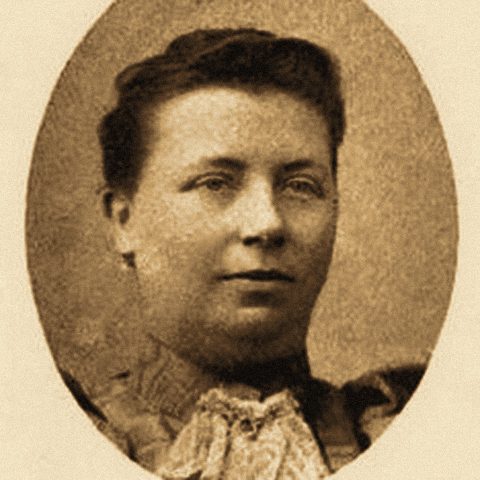
About the author
Florence Fenwick Miller
1854 – 1935 · English journalist, author, and social reformer
Florence Fenwick Miller was an English journalist, author and social reformer of the late 19th and early 20th century. She was for four years the editor and proprietor of The Woman's Signal, an early and influential feminist journal.
If you like Harriet Martineau
More like this
 The Life and Adventures of Robinson CrusoeDefoe9 h 35 m
 The History of the Decline and Fall of the Roman Empire, Volume 1Gibbon27 h 52 m
 The History of the Peloponnesian WarThucydides19 h 8 m
 Twelve Years a SlaveNorthup7 h 11 m
 The Story of My LifeKeller12 h 1 m
 The Germany and the Agricola of TacitusTacitus4 h 44 m

Start with “The Child at Home and at School”
2 chapters free right now — no account. Your place follows you to iPhone and Android.